Cheddar Biscuit Review: What to Look For in Savory Biscuits
Cheddar biscuits don't have anywhere to hide. Cheese, butter, buttermilk, flour, a little leavening — a short list of ingredients, which means every ratio shows up in the first bite. A good one tastes sharp and savory, tears apart with just a little resistance, and leaves your fingers barely shiny. A bad one is salty yellow dough that someone waved a block of cheddar near.
Judging them takes more than a thumbs-up. The next time one lands on your plate, work through it in this order: cheese, salt, crumb, grease. Each one tells you something different about how the biscuit was made.
Cheese Flavor: Look Past the Orange
Color tells you almost nothing. Most orange cheddar biscuits get their hue from annatto in the cheese or from coloring in the mix. What matters is whether the cheese shows up as a flavor or only as a tint.
Sharp or aged cheddar is the right call for baking. It has enough acidity and bite to survive a hot oven and a heavy hand with butter. Mild cheddar all but disappears, which is why so many mediocre biscuits lean on garlic salt and a butter brush to carry the whole thing. Powdered cheese tends to taste sour and slightly chemical at the back of the throat rather than savory.
Two things to check. Eat the top crust before anything else — that's where cheese that touched the hot pan browned and concentrated, so if there's real cheddar in the dough, you'll taste it there. Then notice whether the cheese is distributed through the crumb or sitting in a few pockets. Pockets are fine. Pockets as the only source of cheese flavor mean the dough is doing nothing.
If you bake at home, skip pre-shredded cheese when you can. It's tossed with starch or cellulose to keep it from clumping, and that coating dulls the flavor and can make the crumb gluey. Grate a block of sharp cheddar on the large holes instead.
Salt: The Difference Between Savory and Stinging
Salt in a cheddar biscuit arrives from four or five directions at once: the cheese, the butter, the baking powder, any garlic salt in the dough, and the butter-and-garlic brush on top. That stack is easy to overshoot.
An oversalted biscuit doesn't just taste salty. It stings at the back of the tongue, makes the butter taste metallic, and leaves you reaching for water between bites. An undersalted one fails more quietly: it tastes like paste. Butter and flour with no direction.
Salt reads stronger when the biscuit is hot, so give it three or four minutes to cool before you decide. And pay attention to the topping. A heavy garlic-butter brush can double the sodium of an otherwise balanced biscuit. If you're buying at a bakery counter and they offer the brush, ask for it on the side, or ask them to go light.
At home, use unsalted butter and measure the salt rather than eyeballing it. It's far easier to undersalt slightly and adjust the garlic butter on top than to rescue dough that's already too salty.
Crumb: It Should Tear, Not Smear
Break the biscuit in half instead of biting straight into it. That single move tells you more than the first mouthful will.
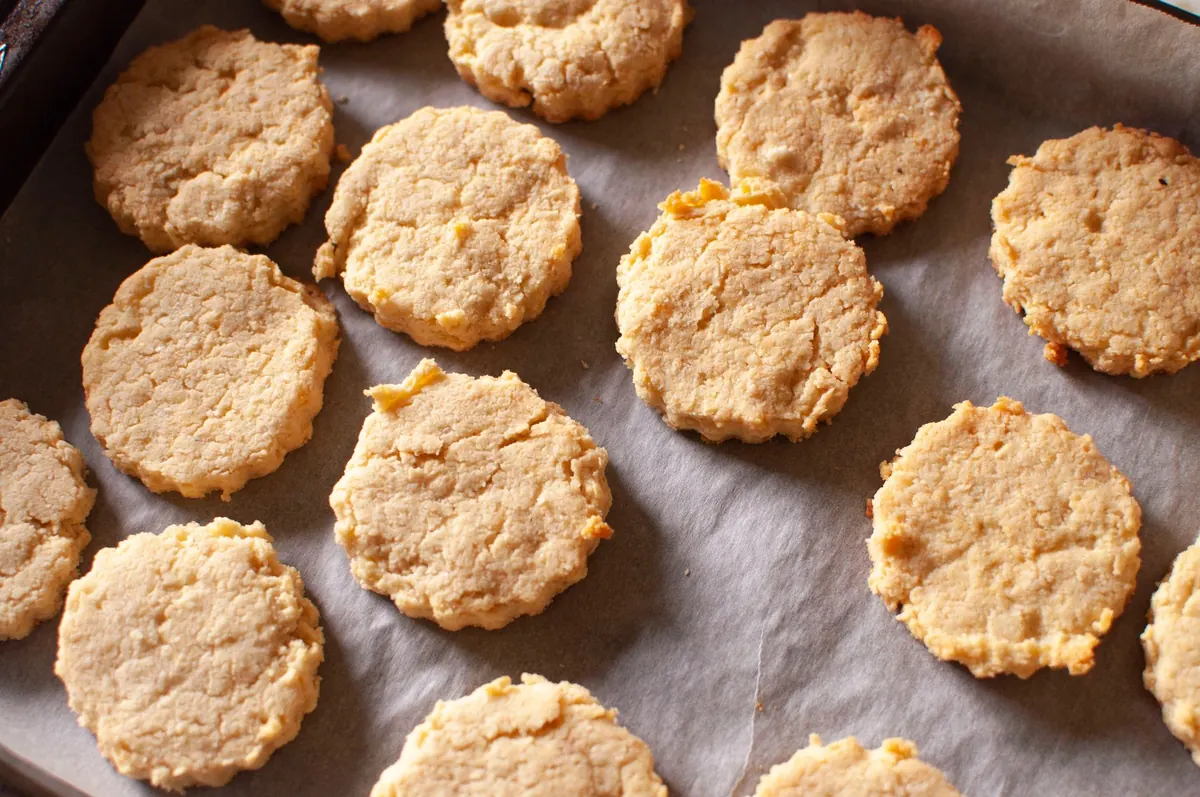
A drop biscuit should be craggy and uneven, moist but not wet, with a crumb that tears into soft shaggy pieces. A rolled and folded biscuit should show distinct flaky sheets and a layered edge. What you don't want is a pale, dense, chewy band through the middle — usually a sign of overmixed dough, too much liquid, or a bake that stopped short.
Mouthfeel matters as much as structure. A good cheddar biscuit clears off your palate. A bad one coats it like wallpaper paste, and that coating is exactly what hides weak cheese.
One more thing: wait. Pull a biscuit from the oven and it's still steaming inside, which softens the crust and makes the crumb feel wetter than it is. Five minutes on a rack does more for a biscuit than any topping.
Greasiness: Richness You Can Feel vs. Fat You Can Wring Out
Rich and greasy are not the same defect, but the two get confused constantly. Rich leaves a faint sheen on your fingers that dries within a minute. Greasy leaves a translucent print that spreads, and the inside of the biscuit feels slick.
The napkin test
Press a biscuit gently into a paper napkin for five seconds and lift. A faint ring is normal. A wet patch the size of a coin or bigger means too much fat, fat that was too warm when it went into the dough, or a bake that didn't set the structure fast enough to hold the butter and cheese oils in place.
Why it happens
Three common causes. Butter worked in warm, so it melted before the dough ever hit the oven. Too much cheese, especially a young cheddar that releases oil when heated. And a low oven, which gives fat time to render out before the crumb sets. Drop biscuits generally want a hot oven — 425°F and up — so the outside firms up fast.
A Five-Minute Tasting Checklist
- Cheese: Does it read as sharp cheddar, or just salty orange?
- Salt: Balanced with the butter, or stinging at the back of your tongue?
- Crumb: Tears into shaggy pieces, or smears into a paste?
- Structure: Layered if rolled, craggy if dropped, no gummy center band.
- Grease: A light sheen is fine; a soaked napkin is not.
- Crust: Browned edges with a bit of crunch, not pale and soft all over.
- Finish: Clean, buttery, cheesy — or sour and powdery?
- Second bite: Better or worse than the first? That's usually your answer.
Fresh, Frozen, and From a Box
Boxed mixes vary the most. Read the ingredient line and look for real cheese rather than cheese powder alone. If it's powder, the flavor is coming from the garlic butter you brush on top, and the biscuit underneath will be soft and one-note.
Frozen biscuits are worth checking for thaw instructions. Baked from frozen, they behave. Thawed first and then baked, the butter and cheese have already softened, and you'll usually get a greasier biscuit with a flatter rise. From a bakery counter, ask when they were made — cheddar biscuits go dense and heavy within a day. To reheat, wrap them in foil and warm them in a low oven. A microwave turns a good crumb rubbery in under a minute.
The Biscuit Worth Ordering Again
Judge a cheddar biscuit on the second bite, after it's cooled a little, and by what's left on your fingers. If the cheese flavor survives the butter, the salt doesn't sting, the crumb tears clean, and the napkin stays mostly dry, you have the real thing. Order it again
Photo: Matilda Iglesias / Pexels

Beginner's Checklist for Buying Biscuits Online: Shipping, Freshness, and Packaging
A practical checklist for judging online biscuit sellers on shipping speed, freshness and packaging, plus...
Biscuit Baking Temperature Guide: Convection vs. Conventional Ovens
A practical guide to baking biscuits in convection and conventional ovens, covering temperature tweaks,...
About Us